What a dehumidifier does during water damage drying
A dehumidifier pulls water vapor out of the air so wet drywall, wood, and carpet can release moisture and dry. Here is how it works in Marietta homes.
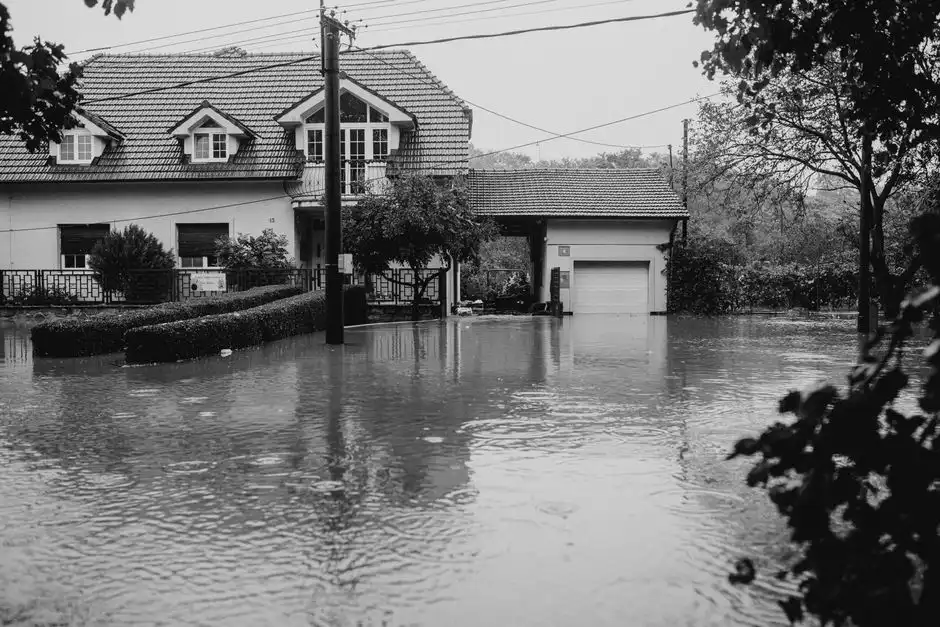
A dehumidifier removes water vapor from the air so that wet building materials - drywall, wood framing, carpet, subfloor - can release their moisture and dry. Without one, the water you can see gets mopped up, but the water you cannot see keeps soaking into the structure and feeding mold. That is the short answer. The longer answer is what this post covers: how dehumidification actually works during a water loss, how long it runs, what size unit a Marietta home needs, and when to bring in a professional instead of a box-store unit.
What a dehumidifier actually does during water damage drying in Marietta GA
What a dehumidifier does during water damage drying in Marietta GA is create a moisture gradient that pulls water out of materials and into the air, where it can be condensed and removed. Water moves from wet to dry. If the air in a flooded room is already saturated, the drywall behind the baseboard has nowhere to send its moisture, so it just sits there. A dehumidifier keeps the air dry enough that evaporation keeps happening.
Here is the sequence our technicians run on a typical loss:
- Extract standing water with truck-mount or portable extraction units.
- Set air movers to break the surface tension and lift moisture off materials.
- Run refrigerant or desiccant dehumidifiers to capture that moisture out of the air.
- Monitor with penetrating and non-penetrating moisture meters until readings match a dry standard.
Skip step three and steps one, two, and four are wasted effort. The water just re-condenses on cool surfaces or soaks back into the drywall.
A refrigerant dehumidifier works like a small air conditioner. Warm, humid air passes over cold coils, water condenses out, and the dry air is reheated and pushed back into the room. Desiccant units use a rotating wheel coated with silica gel to absorb moisture - those are the ones we bring out for cool, damp crawl spaces and unheated areas where refrigerant units lose efficiency below about 65°F.
Why air movers alone will not dry your Marietta home
Air movers do not remove water - they relocate it. A fan blowing across wet drywall speeds evaporation, but that moisture has to go somewhere. In a closed room, humidity climbs until the air cannot hold any more, and evaporation stops cold. We have walked into Marietta homes where a homeowner rented four fans from a hardware store and ran them for three days. The carpet felt dry on top. The pad underneath was still soaked, and the subfloor was reading 28% moisture content.
That is the pattern we see most often in the subfloor drying Marietta GA calls we run. The floor surface looks fine. The structure underneath is not. Air movers without dehumidification just push that problem around the room.
The pairing matters. Air movers increase evaporation rate. Dehumidifiers remove the evaporated water from the air. Together they drop moisture content in materials by roughly 8 to 12 percentage points per day under normal conditions. Separately, neither one finishes the job.
How long should a dehumidifier run in Marietta Georgia?
A dehumidifier should run continuously - - until moisture readings in the affected materials return to a dry standard, which for most Marietta homes takes 3 to 5 days. Small, contained losses like a supply line under a kitchen sink often dry in 48 to 72 hours. Larger losses involving wall cavities, hardwood, or a slab can run 5 to 7 days, sometimes longer in humid summer months.
We do not guess at that number. We take moisture readings twice a day and compare them to a dry standard for the material. Drywall in a Marietta home typically reads 8% to 12% moisture content when dry. Hardwood flooring reads 6% to 9%, adjusted for our regional equilibrium. When the wet area matches the dry area, we pull equipment.
Turning the dehumidifier off at night to save on the power bill is the single most common mistake we see. Every hour it is off, the room re-humidifies, and the clock restarts. Running a dehumidifier continuously for 4 days costs far less than replacing mold-contaminated drywall and insulation.
What size dehumidifier does a water-damaged room need?
Size is measured in pints of water removed per day at standard test conditions, and the right size depends on the cubic footage of the affected area, not the square footage of the house. A 1,000-square-foot finished basement with 8-foot ceilings is 8,000 cubic feet of air that needs to be dried - that is a different machine than a 10x12 bathroom.
Rough sizing we use on residential losses:
- Up to 500 sq ft, contained loss: 30 to 50 pint portable unit.
- 500 to 1,200 sq ft: 70 to 100 pint unit, often two units for a full floor.
- 1,200 to 2,500 sq ft or a flooded crawl space: commercial low-grain refrigerant or desiccant unit.
- Category 3 water (sewage, groundwater, or long-standing water): commercial desiccant, no exceptions.
Undersizing is worse than not running one at all, because it gives a false sense of progress. A 30-pint unit in a 1,500-square-foot basement will pull water out of the air all day and never get ahead of what the walls are releasing.
Where dehumidifiers matter most in Marietta homes
Dehumidification matters most in the parts of a Marietta home that have no airflow and no sunlight - wall cavities, subfloor assemblies, crawl spaces, and finished basements. Those are the places where water sits and mold starts within 24 to 48 hours.
Wall cavities are the hardest. When water wicks up behind baseboards or runs down inside a stud bay, the drywall face can read dry while the paper backing and insulation are still soaked. We drill small inspection holes, insert drying tubes, and direct dehumidified air into the cavity. That is the core of the wall cavity and drywall drying Marietta GA work we do after supply line failures and roof leaks.
Hardwood floors are the second concern. Wood cups, crowns, and gaps when the top dries faster than the bottom. We run dehumidifiers in the room while pulling air across the floor surface and, on severe losses, use floor mats to pull moisture from underneath. If you have seen boards lifting at the seams after a dishwasher leak, that is a drying-speed problem, and the hardwood floor drying Marietta GA process is how we reverse it before the boards need replacing.
Marietta's housing stock splits roughly into two groups. Homes built before 1980 - much of the stock near the Square and along the older streets off Whitlock - tend to have tighter crawl spaces, original hardwood, and plaster in some rooms, all of which hold water longer than modern construction. Homes built after 2000 in the eastern parts of the city tend to have OSB subfloor and engineered flooring, which dry faster but delaminate if the drying is uneven.
We also see a specific pattern in the neighborhoods east of the Marietta Square, where slab-on-grade ranches and older crawl-space homes sit on heavy clay soil that sheds water slowly after a storm. When a water heater or washing machine line fails in those homes, the water has nowhere to drain, and it spreads laterally under flooring. That is why we keep dedicated equipment staged for Structural drying and dehumidification in Fair Oaks and the surrounding east-side neighborhoods.
Can I use my own dehumidifier in Marietta GA?
You can use your own dehumidifier for a small, clean-water spill - a toilet supply line, an overflowing sink, a small AC condensate leak - if the affected area is under about 300 square feet and you start within a few hours. A residential 50-pint unit running continuously will help.
It will not be enough for anything involving:
- Water that has been sitting more than 24 hours.
- Sewage, groundwater, or any Category 3 contamination.
- Water that has reached a wall cavity, subfloor, or ceiling.
- More than one room, or any area over roughly 500 square feet.
Residential units also lack the instrumentation that matters. They cannot tell you when the structure is dry - only when the air is dry. Those are different things, and the gap between them is where mold grows. If you want to know what a professional setup looks like for a serious loss, our post-loss dehumidification Marietta GA service covers the equipment, monitoring, and documentation side.
Common mistakes we see during post-loss dehumidification
The mistakes that turn a two-day dry-out into a two-week mold remediation almost always come down to the same handful of errors.
- Shutting the dehumidifier off overnight. Every off-cycle adds hours to the drying timeline and raises the mold risk.
- Closing doors and windows but leaving the HVAC running. Your central air will pull moisture out of the room and redistribute it through the house.
- Relying on a fan and an open window. In a Marietta July, outdoor air is 75% to 85% relative humidity. You are importing water, not removing it.
- Not checking behind the baseboard. Drywall face reads dry, cavity reads 25%. We see this on almost every kitchen and bathroom loss.
- Pulling equipment based on how it looks. Carpet that feels dry on top can have a soaked pad underneath. Moisture meters decide when drying is done, not fingers.
- Waiting for the insurance adjuster before starting. Most policies require you to mitigate further damage. Waiting two days for an adjuster can turn a the size of the loss dry-out into a the size of the loss rebuild.
When to call a professional
Call a professional when the water has been sitting more than 24 hours, when it has reached a wall, ceiling, or floor assembly, when the affected area is larger than one room, or when the water is anything other than clean supply-line water. Those four conditions cover roughly 80% of the losses we get called to in Marietta.
Local Structural Drying Marietta handles structural drying and dehumidification across Marietta and the surrounding east Cobb communities. We extract, set equipment, monitor with calibrated meters, and document the dry-down for your insurance claim. If you are not sure whether your situation needs a commercial unit or a box-store rental, call us and describe it - we will tell you straight.
Frequently Asked Questions
What does a dehumidifier do during water damage drying in Marietta GA?
It pulls water vapor out of the air so wet drywall, wood, and carpet can keep releasing moisture. Without it, the air saturates, evaporation stops, and mold can start within 24 to 48 hours. Air movers plus a dehumidifier together dry a structure; either one alone does not.
How long should a dehumidifier run in Marietta Georgia?
Continuously,, for 3 to 5 days on a typical residential loss. Small contained spills dry in 48 to 72 hours. Losses involving wall cavities, hardwood, or a slab can run 5 to 7 days. We pull equipment when moisture readings match a dry standard, not on a fixed schedule.
Who provides dehumidifiers near me in Marietta?
Local Structural Drying Marietta provides commercial refrigerant and desiccant dehumidifiers, air movers, and moisture monitoring for water damage losses throughout Marietta and east Cobb. We deliver, set, monitor, and remove the equipment, and we document readings for your insurance claim.
Can I use my own dehumidifier in Marietta GA?
Yes, for a small clean-water spill under about 300 square feet if you start within a few hours. A 50-pint residential unit running continuously will help. It is not enough for water sitting over 24 hours, sewage or groundwater, or any loss that has reached a wall cavity or subfloor.
How much does dehumidification cost in Marietta in 2026?
Typical 2026 pricing for a residential dry-out in this area runs the size of the loss depending on square footage, number of days, and equipment. That covers extraction, air movers, dehumidifiers, daily monitoring, and documentation. Most homeowners insurance policies cover the mitigation portion.
Get help with Structural drying and dehumidification in Marietta
If water has reached your walls, floors, or subfloor, the clock is running. We set commercial dehumidifiers and air movers, monitor moisture daily, and tell you exactly when your Marietta home is dry. Call 03289293008 and we will walk you through what your loss needs.