Checking a drying setup that is not pulling moisture
Your dehumidifier is running but the drywall still reads wet. Here is how to check a drying setup that is not pulling moisture in Marietta GA, step by step.
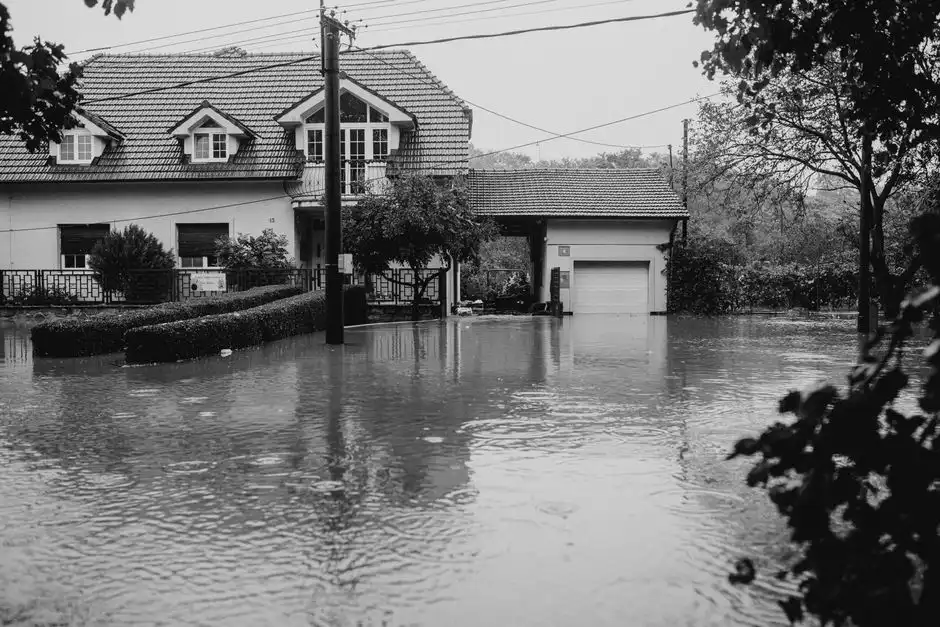
A drying setup that is not pulling moisture almost always has one of four problems: no airflow across the wet material, a dehumidifier that is not actually removing water, a moisture source that is still feeding the assembly, or readings that were never right to begin with. Checking a drying setup that is not pulling moisture in Marietta GA starts with a 30-minute walkthrough of airflow, water output, and moisture content readings, not with buying a bigger dehumidifier. Below we walk through exactly how our technicians diagnose a stalled setup, what the numbers should look like, and when it is time to bring in commercial-grade equipment.
Why a drying setup stops pulling moisture in Marietta GA
Drying setup troubleshooting in Marietta usually comes down to physics, not bad luck. Water moves from wet materials into the air only when three conditions line up: warm enough air, moving air, and low enough humidity in that air to accept more vapor. Break any one of those and the setup stalls even though the equipment is humming along.
Marietta sits in a humid subtropical pocket. From May through September, outdoor dew points routinely sit between 65°F and 74°F. If you are running a drying setup with windows cracked or a door propped open, you are pulling that moisture right back into the house. We see this most often in older brick ranches around the Marietta Square and in slab homes off Whitlock Avenue, where summer humidity hangs around until 9 or 10 at night.
Structural drying and dehumidification is the process of removing water from building materials and the air around them using controlled airflow, refrigerant or desiccant dehumidifiers, and daily moisture monitoring until readings return to a dry standard. When the process stops working, the cause is almost always measurable.
How do I check my drying equipment in Marietta Georgia?
How do I check my drying equipment in Marietta Georgia? Start with a five-point inspection: power, airflow, water output, humidity readings, and moisture content in the wet materials. Run it in that order - a dehumidifier that is not getting power is not a dehumidifier problem, and a fan pointed at the wrong wall is not a drying problem.
- Power and breaker. Confirm the dehumidifier is on a dedicated circuit. LGR units pull 7 to 9 amps at 115V; a shared bedroom circuit will trip once the air handler kicks on.
- Airflow. Hold your hand 6 inches in front of the supply grille. You should feel a steady, cool stream. Weak or warm air means a dirty coil, a failed blower, or a blocked intake.
- Water output. Empty the bucket into a measuring container for one hour. A properly working 70-pint LGR should pull 3 to 5 pints per hour at 80°F and 60% RH. Under 1 pint per hour means the unit is not doing its job.
- Humidity readings. Place a thermo-hygrometer at the return and at the supply. A working dehumidifier drops the return air by 8°F to 12°F and 15% to 25% RH across the coil.
- Moisture content. Pin-meter the baseboard, drywall at 12 inches and 24 inches, and the subfloor. Log the numbers so you can compare tomorrow.
If you want a second set of eyes on the readings, our team handles post-loss dehumidification Marietta GA calls every week and can tell within an hour whether the setup is undersized, mispositioned, or simply not running right.
Airflow problems that stall a drying setup
Airflow is the number one reason a drying setup not working Marietta call comes in. Wet drywall releases moisture into the air at the surface, and if that air is not moving, the boundary layer saturates and drying effectively stops.
Here is what we check on every airflow call:
- Fan placement. Air movers should be angled 15° to 45° against the wall, not blowing straight across the room. The goal is a vortex scrubbing the wet surface.
- One fan per 10 to 16 linear feet of wet wall. A single fan in a 20-foot hallway leaves the far end wet.
- Closed doors. A closed bedroom door traps humid air. We cut a 2-inch gap under the door or install a doorway fan.
- Blocked returns. Furniture, boxes, and plastic sheeting pushed against the dehumidifier intake cut its capacity by 30% to 50%.
If the wet materials include painted drywall, the paint itself is a vapor retarder. We score the paper or drill 3/8-inch weep holes every 12 inches to let vapor escape, which is standard practice for wall cavity and drywall drying Marietta GA.
Refrigerant and compressor issues on LGR dehumidifiers
A refrigerant dehumidifier that runs but pulls no water is usually low on charge, has a frosted coil, or has a compressor that is short-cycling. These are not DIY fixes - refrigerant work requires EPA Section 608 certification - but you can spot the symptoms.
Watch for these signs:
- Coil icing. If the evaporator coil frosts over within 20 minutes, the unit is running below its design temperature or is low on charge. Turn it off, let it thaw, and check the filter.
- Warm exhaust. A healthy LGR blows warm, dry air out the top. Cool or room-temperature exhaust means the compressor is not engaging.
- Short cycling. If the compressor kicks on and off every 60 to 90 seconds, the overload protector is tripping. Common cause: a dirty condenser coil or a failing capacitor.
- No condensate. Zero water in the bucket after 60 minutes at 80°F and 60% RH means the unit is not dehumidifying at all.
We swap in a backup LGR the when a unit fails mid-dry. If the loss is on a slab, that backup matters even more - concrete releases water slowly, and a 24-hour gap can add three to five days to the dry time. That is why we treatconcrete slab drying Marietta GAas a priority when a dehumidifier goes down.
Moisture readings that tell you the setup is failing
Moisture readings are the only honest scorecard for a drying setup. If the numbers are not dropping, the setup is not working - no matter how good the equipment looks.
Here is what we expect to see on a properly running job in Marietta:
- Drywall: 0.5% to 1% moisture content drop per day in a controlled environment. A wall reading 18% should hit 12% in roughly five to six days.
- Hardwood: 1 to 2 percentage points per day with proper airflow. A floor at 14% MC should reach 8% to 10% in three to five days.
- Subfloor: 2 to 3 points per day when the cavity is open and air is moving underneath.
- Ambient RH: 30% to 50% in the drying chamber. Above 60% and you are feeding mold, not drying.
Log readings at the same time every day, in the same spots, with the same meter. A pin meter on drywall and a pin-less meter on the same wall will read differently - pick one and stick with it. If you are seeing flat readings for 48 hours, the setup needs to change. For floors, that often means adding hardwood floor drying Marietta GA mats or a floor drying system that pulls vapor from underneath the boards.
Common mistakes we see on DIY drying setups
Most stalled setups we walk into share the same handful of mistakes. Fixing them costs nothing and often restarts the dry within a day.
- Running the HVAC on fan-only. This spreads moisture through the whole house instead of concentrating it in the drying chamber.
- Leaving the wet carpet pad in place. Pad holds 10 to 20 times its weight in water. If it is not extracted or removed, the carpet above it will never dry. We handle carpet and pad drying Marietta GA with weighted extraction and float the carpet on air movers.
- Skipping the vapor barrier. Plastic sheeting over a wet floor traps moisture and grows mold in 24 to 48 hours.
- Not sealing the drying chamber. Zip walls and poly barriers keep the dry air where it is needed.
- Trusting the bucket. A full bucket means the unit is working; an empty bucket means nothing is happening. Measure output, do not eyeball it.
We also see homeowners in Structural drying and dehumidification in Elizabeth run a single 50-pint residential unit in a 600-square-foot basement. That unit is undersized by half. A 600-square-foot wet basement needs a 70-pint LGR minimum, and often two air movers per 15 linear feet of wet wall.
When to call a professional
Call a professional when readings have been flat for 48 hours, when you see mold growth, when the wet area is larger than 100 square feet, or when the water came from a category 2 or 3 source like a sewer backup or washing machine discharge. Those jobs need containment, antimicrobial treatment, and commercial drying equipment that most homeowners do not own.
Local Structural Drying Marietta runs drying equipment checks across Marietta and the surrounding Cobb County neighborhoods. We bring moisture meters, thermal imaging, LGR dehumidifiers, and air movers, and we log readings every day so you can see the dry progress in writing. If your setup has stalled, we can usually tell you why within the first hour on site.
Frequently Asked Questions
Why is my drying setup not pulling moisture in Marietta GA?
Most often it is one of four things: no airflow across the wet surface, a dehumidifier that is not actually removing water, an active water source still feeding the assembly, or a drying chamber that is not sealed. Check water output first - under 1 pint per hour on a 70-pint LGR means the unit is failing.
How do I check my drying equipment in Marietta Georgia?
Check power, airflow, water output, humidity drop across the coil, and moisture content in the wet materials, in that order. Measure the bucket output for one hour. A healthy 70-pint LGR pulls 3 to 5 pints per hour at 80°F and 60% RH.
Who fixes drying equipment near me in Marietta?
Refrigerant and compressor repairs require an EPA- technician, so most homeowners call a restoration company rather than a repair shop. Local Structural Drying Marietta swaps in a working LGR the and keeps your dry on schedule while the failed unit is repaired.
How long should drying equipment run in Marietta GA?
Plan on three to five days for typical drywall and carpet, five to seven days for hardwood, and seven to ten days for slab or subfloor losses. Equipment runs until moisture content returns to the dry standard - usually 8% to 12% for wood and under 1% for drywall.
Can I just run a bigger dehumidifier to speed things up?
No. Oversizing a dehumidifier without matching airflow just dries the air and leaves the materials wet. The right fix is balanced airflow, correct unit size for the cubic footage, and a sealed drying chamber. Adding capacity without fixing airflow usually wastes money.
Get help with Structural drying and dehumidification in Marietta
If your drying setup has stalled and the readings are not moving, we can be on site today with meters, thermal imaging, and commercial-grade drying equipment. Call Local Structural Drying Marietta at 03289293008 and we will tell you exactly why the setup is not pulling moisture - and what it takes to get the structure dry.